
The rapid growth of wearable technology has significantly transformed the fitness and health industry. Devices such as smartwatches, fitness bands, and health trackers are no longer just accessories—they have become essential tools for monitoring daily activities, improving wellness, and maintaining healthier lifestyles. As the adoption of wearables continues to rise, businesses are increasingly investing in fitness app development services to create innovative, user-friendly, and data-driven applications tailored for these devices.
In this blog, we will explore the importance of fitness app development for wearable devices, key features, benefits, development strategies, challenges, and future trends shaping this fast-evolving domain.
The Rise of Wearable Fitness Technology
Wearable devices have revolutionized how users track their fitness journeys. From counting steps to monitoring heart rate and sleep patterns, these devices provide real-time insights that empower users to make informed health decisions.
The global demand for wearable fitness apps is driven by:
Increased health awareness
Growing adoption of IoT-enabled devices
Demand for real-time health monitoring
Integration with smartphones and cloud platforms
Businesses that leverage custom android app development services can create tailored fitness solutions that seamlessly integrate with wearable devices, offering enhanced user experiences and improved performance tracking.
Why Fitness Apps for Wearables Matter
Fitness apps designed for wearable devices offer several advantages over traditional mobile applications. They provide instant feedback, continuous monitoring, and personalized insights, making them indispensable for modern users.
1. Real-Time Data Tracking
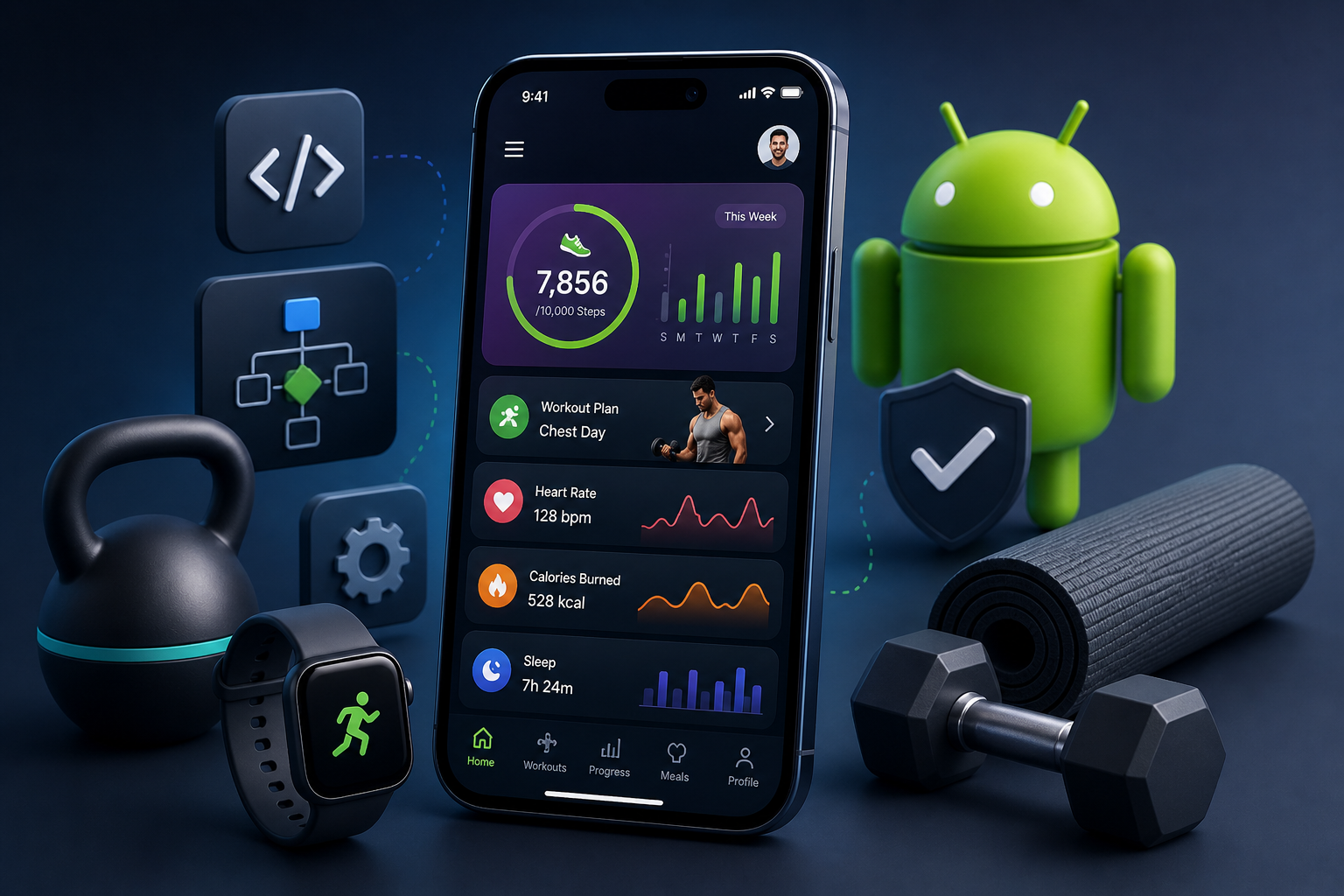
Wearable apps collect and process data in real-time, allowing users to monitor:
Heart rate
Calories burned
Distance traveled
Sleep quality
2. Improved User Engagement
Push notifications, reminders, and gamification features encourage users to stay consistent with their fitness goals.
3. Personalized Fitness Experience
Advanced algorithms analyze user data to provide customized workout plans and health recommendations.
4. Seamless Connectivity
Wearable apps sync effortlessly with smartphones and cloud platforms, ensuring data accessibility across devices.
Key Features of Fitness Apps for Wearables
Developing a successful fitness app requires incorporating essential features that enhance usability and performance. Here are some must-have functionalities:
1. Activity Tracking
Track steps, running distance, cycling stats, and other physical activities with precision.
2. Health Monitoring
Integrate sensors to monitor:
Heart rate
Blood oxygen levels
Stress levels
3. GPS Integration
Enable route tracking for outdoor activities like running, hiking, and cycling.
4. Sleep Tracking
Provide insights into sleep patterns and suggest improvements for better rest.
5. Goal Setting and Progress Tracking
Allow users to set fitness goals and track their achievements over time.
6. Notifications and Alerts
Send reminders for workouts, hydration, and sleep schedules.
7. Integration with Wearable Devices
Ensure compatibility with popular wearable platforms for seamless functionality.
8. Social Sharing and Gamification
Encourage user engagement through leaderboards, challenges, and social sharing features.
Benefits of Fitness App Development for Wearables
1. Enhanced User Experience
Wearable apps offer convenience by providing instant access to fitness data without requiring users to check their smartphones.
2. Increased Customer Retention
Interactive features and personalized insights keep users engaged, leading to higher retention rates.
3. Data-Driven Insights
Businesses can leverage user data to improve app performance and offer better services.
4. Revenue Opportunities
Monetization strategies include:
Subscription plans
In-app purchases
Premium features
5. Brand Differentiation
Innovative wearable apps help businesses stand out in a competitive market.
Development Process for Fitness Apps
Creating a fitness app for wearable devices involves several stages:
1. Market Research and Planning
Understand user needs, analyze competitors, and define app objectives.
2. UI/UX Design
Design intuitive interfaces optimized for small screens and touch interactions.
3. Choosing the Right Technology Stack
Select technologies that ensure scalability, performance, and compatibility with wearable devices.
4. Development and Integration
Build the app and integrate it with wearable sensors, APIs, and cloud services.
5. Testing and Quality Assurance
Ensure the app performs smoothly across different devices and scenarios.
6. Deployment and Maintenance
Launch the app and continuously update it based on user feedback and technological advancements.
Role of AI and Machine Learning
Artificial Intelligence (AI) and Machine Learning (ML) play a crucial role in enhancing wearable fitness apps.
Key Applications:
Personalized workout recommendations
Predictive health analytics
Voice-assisted fitness coaching
Automated activity recognition
By integrating AI, businesses offering fitness app development services can deliver smarter and more adaptive solutions.
Challenges in Wearable Fitness App Development
Despite its potential, developing fitness apps for wearables comes with challenges:
1. Limited Screen Size
Designing user-friendly interfaces for small screens requires careful planning.
2. Battery Constraints
Wearable devices have limited battery life, so apps must be optimized for energy efficiency.
3. Data Security and Privacy
Handling sensitive health data requires robust security measures and compliance with regulations.
4. Device Compatibility
Ensuring compatibility across multiple wearable devices and platforms can be complex.
5. Real-Time Data Processing
Managing and analyzing large volumes of real-time data requires efficient backend systems.
Best Practices for Developing Wearable Fitness Apps
1. Focus on Simplicity
Keep the interface clean and easy to navigate.
2. Optimize Performance
Ensure the app runs smoothly without draining battery life.
3. Prioritize Security
Implement encryption and secure authentication mechanisms.
4. Ensure Cross-Platform Compatibility
Develop apps that work seamlessly across different devices and operating systems.
5. Leverage Cloud Integration
Use cloud technology for data storage and processing.
6. Continuous Updates
Regularly update the app to add new features and improve performance.
Technology Stack for Wearable Fitness Apps
A robust technology stack is essential for building scalable and efficient apps.
Frontend:
Kotlin/Java for Android
Swift for iOS
Backend:
Node.js
Python
Firebase
APIs and Integrations:
Health APIs
Wearable SDKs
Cloud services
Businesses using custom android app development services can ensure seamless integration with Android-based wearable devices.
Monetization Strategies
Fitness apps for wearable devices offer multiple revenue streams:
1. Freemium Model
Offer basic features for free and charge for premium functionalities.
2. Subscription Plans
Provide monthly or yearly subscription packages.
3. In-App Purchases
Sell workout plans, diet guides, and premium features.
4. Advertisements
Display targeted ads within the app.
5. Partnerships
Collaborate with fitness brands and healthcare providers.
Future Trends in Wearable Fitness Apps
The future of wearable fitness apps is promising, with several emerging trends:
1. Advanced Health Monitoring
Wearables will track more complex health metrics such as blood pressure and glucose levels.
2. Integration with Telehealth
Fitness apps will connect users with healthcare professionals for remote consultations.
3. Augmented Reality (AR)
AR will enhance workout experiences by providing interactive training sessions.
4. Voice and Gesture Control
Hands-free interactions will improve usability and convenience.
5. Blockchain for Data Security
Blockchain technology will ensure secure and transparent data management.
Why Businesses Should Invest Now
The wearable fitness app market is expanding rapidly, presenting significant opportunities for businesses. Investing in fitness app development services now can help companies:
Capture a growing market
Build strong customer relationships
Leverage data for business growth
Stay ahead of competitors
With the right strategy and technology, businesses can create innovative fitness solutions that meet evolving user demands.
Conclusion
Fitness app development for wearable devices is reshaping the health and wellness landscape. With real-time tracking, personalized insights, and seamless connectivity, these apps empower users to take control of their fitness journeys.
For businesses, investing in wearable fitness apps is not just a trend—it’s a strategic move toward future growth. By leveraging custom android app development services, companies can build scalable, user-centric applications that deliver exceptional value.
As technology continues to evolve, wearable fitness apps will become even more advanced, offering deeper insights, smarter recommendations, and enhanced user experiences. Now is the perfect time to embrace this innovation and create impactful fitness solutions for the modern world.











Write a comment ...